

Morning All,
After 26 years of looking at chill across some of the growing areas, I can say that this year is one that is like no other during this time. We have had low chill years in the past, but this is showing some significant divergences from previous years. The major differences from what I have seen in the past are:
- Unusually heavy fogs in July that are persevering well into late morning and the afternoon (maintaining cooling on the bud).
- Lack of warm weather in the mid-July period.
- Forecast weather for the next 14 days in most areas is expected to be very much below maximum daytime averages for this time of the year. Minimum temperatures are forecast above critical low temperatures and also below maximum temperatures that would result in negative chill accumulation.
One of the interesting issues with the current weather is the impact that it is having on several plant species
- Flowering plum varieties that normally flower within 3-4 days of each other, one is in full flower and the one next to it is not even in pink bud.
- Ne Plus is going to be more in isolation than normal, so this will be well below the long-term average years.
- Some varieties are in an extended window of pink bud, which would normally indicate that chill accumulation has been broken and chill acquired after this period is of limited value.
Some of the recent conversations around chill accumulation have been producing repetitive recommendations based on trial data. If there is one thing I have learnt over the past 26 years, it is that there is no such thing as an average year. Every season needs to be assessed on its own merits, which makes a standard or repetitive recommendation for managing chill nearly impossible in Australia. When you add in factors such as block contours and airflow, understanding the specific seasonal conditions and airflow patterns within each block becomes critical for those relying on chill hours to achieve good crop set and maximise production from season to season.
Data to date still indicates RCU below recent years
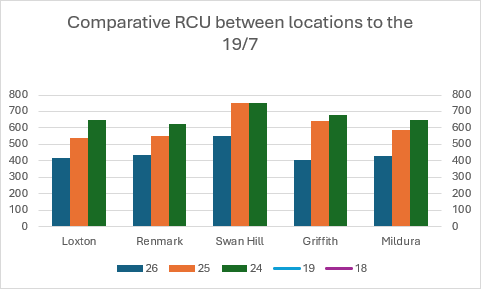
Comparative RCU Table
Looking at the data below, we can see that Swan Hill has accumulated significantly more chill than Sunraysia, the Riverland and Griffith(MIA). For those considering Dormex applications for bud break, the forecast cool temperatures over the next two weeks will make application timing critical. We are expected to receive another 140–220 RCU over the next 14 days, which should improve the effectiveness of dormancy-breaking applications made later. As always, timing needs to be considered alongside bud movement, with application rates adjusted accordingly.
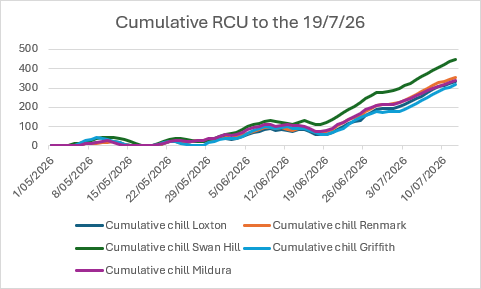
The Goulburn Valley paints a different picture with expected RCU to get up to the 900+ over the next few weeks. While the area has traditionally been focused on the production of higher chill and yielding varieties, the move into lower chill crops will be interesting as these will break bud during cooler conditions and be more vulnerable to frost events.

Regards,
Shane Phillips | Head Chemist - Research & Development
E: shane.phillips@biocentral-labs.com
Stay connected and receive updates, resources and insights—subscribe to our newsletter today.


