
Morning All,
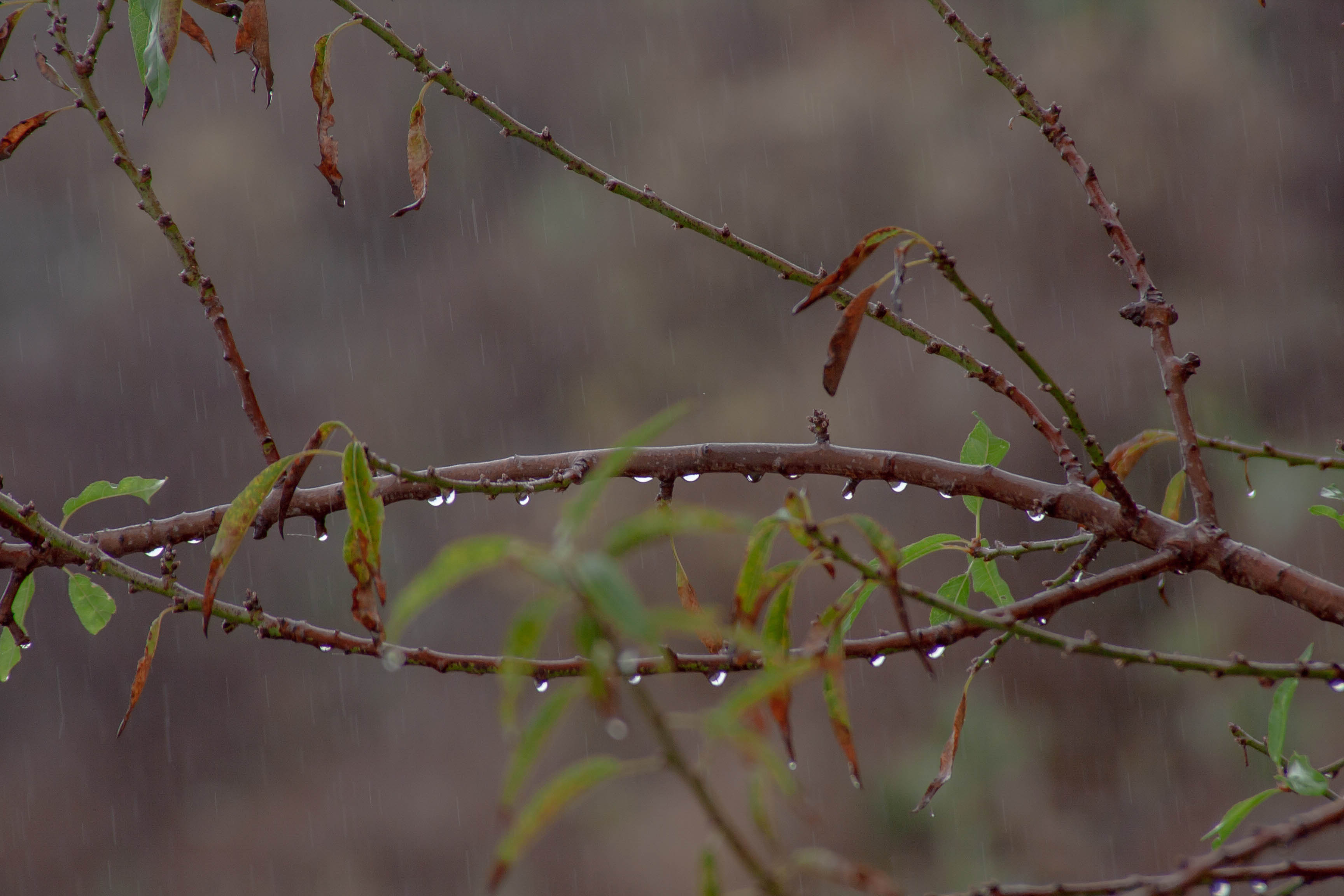
After a wet and wild weekend across all growing districts, warming weather and the lengthening of days, we are seeing bud movement in most crops in the Riverland and Sunraysia districts.
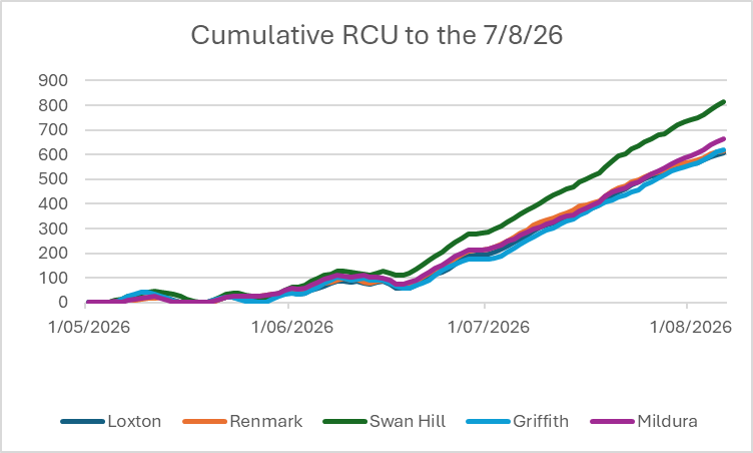
Total chill is less than previous years, but we have been fortunate that the forecast warm weather in July and August did not eventuate, resulting in late-season chill accumulation. Probably of more significance has been the widespread late rain across all growing regions in Southern Australia and the potential outcomes this will have on tree growth and flowering.
This would suggest that trees emerging from dormancy with a fully saturated soil profile will have the potential to be vegetatively dominant if we enter warm growing conditions in spring.
For growers in the areas below, you can log first bud movement to the date and see where you have got to in terms of chill hours by variety in your own area. It would also be worth plotting when leaf drop and true dormancy had occurred. This will give a better idea of the actual chill hours required for plants breaking dormancy by variety in your area.
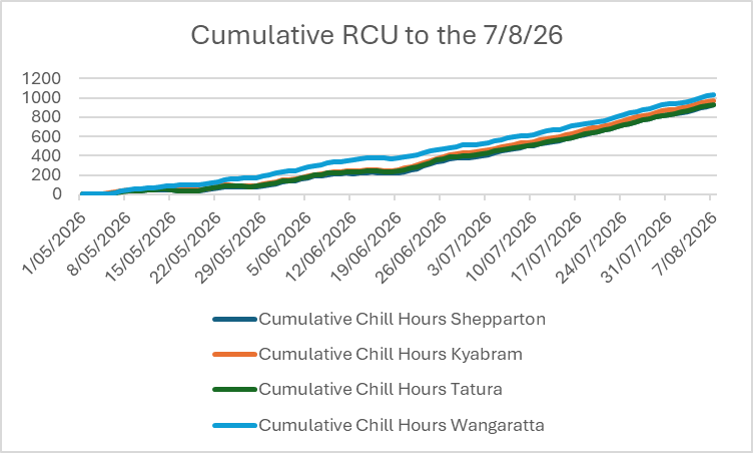
With rainfall between 15–30 mm in the Riverland, 20–30 mm in Sunraysia, 40–70 mm in the Goulburn Valley and Wangaratta regions and 15–28 mm in the MIA, soils are now at field capacity.
Putting the Research on the Field
There has been some interesting research around temperature in the period leading into flowering. Work conducted in apricots found that warmer pre-blossom conditions accelerated visible flower development and brought flowering forward, but the development of the pistil did not advance at the same rate. This resulted in a lack of synchrony within the flower and ultimately reduced fruit set.
While this work was conducted in apricot rather than almond, I think it is worth keeping in mind as we move through bud break. What we see externally in terms of bud movement does not necessarily tell us everything that is happening within the flower.
With soils now at field capacity, the next few weeks will be interesting. If the weather remains relatively dry over the next few weeks I would expect a strong and even flowering in most areas. Other than pistachios (which benefit from late chill) most crops are in the stage of breaking dormancy to some degree as the days start to lengthen.
The rainfall event should also have an impact on keeping soils warm over the next few weeks. With temperatures forecast to remain below 18°C across the regions, I would not expect the later varieties to be significantly impacted by the current weather pattern.
Where I would be watching closely is in hollows, poorly drained areas and properties with heavy, high ECE soils. These areas are more likely to remain saturated for longer and this is where we could see a greater effect on root activity and, subsequently, vegetative growth at bud burst.
There is also the potential for strong vegetative growth if the forecast rain across the Riverland from the 17th–20th and the eastern regions from the 19th–23rd eventuates. With soils already at field capacity, another significant rainfall event could set up conditions for quite a strong vegetative response as temperatures increase.
This is also one of the reasons I have called the end of chill accumulation at this time as we have had significant rainfall between dormancy break and full bloom. I think the next stage is less about accumulating additional chill and more about watching how the trees respond to the conditions they now have.
My thoughts are that, other than Ne Plus, most of the other almond varieties will synchronise flowering extremely well.
As always, the value is in watching what happens in your own orchard and recording it. First bud movement, leaf drop, dormancy and flowering dates, combined with the chill data, will continue to give us a much better understanding of how varieties are responding in different regions and seasons.
Regards until 2027 when it starts all over again.
Shane Phillips | Head Chemist - Research & Development
E: shane.phillips@biocentral-labs.com
Stay connected and receive updates, resources and insights—subscribe to our newsletter today.
References
Rodrigo, J. & Herrero, M. (2002). Effects of pre-blossom temperatures on flower development and fruit set in apricot. Scientia Horticulturae, 92(2), 125–135. https://doi.org/10.1016/S0304-4238(01)00289-8


